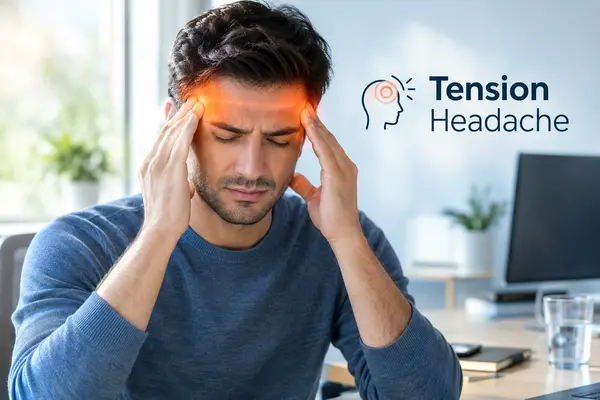
Your head feels clamped in a vice, and the dull ache will not quit. You pop a pill, but the pressure creeps back by noon. A tension headache responds to a real plan, not random fixes. This guide shows you how to identify it, stop it fast, prevent it long-term, and spot the danger signs that demand a doctor today.
What Is a Tension Headache?
A tension headache is the most common primary headache disorder in adults worldwide. It creates mild-to-moderate, pressing pain on both sides of the head, often described as a tight band squeezing the skull. No underlying disease, structural damage, or brain abnormality causes it.
The International Headache Society classifies this condition as tension-type headache, or TTH, in its ICHD-3 diagnostic manual. The classification “primary” means the headache itself is the actual medical condition, rather than a symptom of an infection, head trauma, or tumor.
Roughly 26% of adults globally deal with this type of head pain each year, according to a 2022 epidemiological analysis published in The Journal of Headache and Pain. Most individuals manage the pain on their own without seeking clinical care.
Researchers identify two primary biological mechanisms. Muscles around the skull, scalp, and neck contract excessively, while the central nervous system amplifies pain signals. Persistent emotional stress, irregular sleep patterns, and extended screen time feed both pathways.
| Quick Fact | Detail |
| Medical name | Tension-type headache (TTH) |
| Classification | Primary headache disorder (ICHD-3, Section 2) |
| Typical pain | Dull, pressing, band-like, bilateral |
| Intensity | Mild to moderate |
| Duration | 30 minutes to 7 days |
| Global prevalence | Approximately 26% of adults |
| Best first moves | Water, heat therapy, screen breaks, slow breathing |
Tension Headache Symptoms You Should Recognize
Tension headache symptoms include dull, pressing pain across both sides of the head, forehead tightness, and sore neck or scalp muscles. The pain remains mild to moderate and does not worsen with routine movement. Vomiting does not happen, and any light or sound sensitivity remains mild.
Clinicians evaluate sore areas across the scalp, temples, neck base, and shoulders as pericranial tenderness. Pressing firmly on these spots often reveals tight muscle knots that reproduce the headache pain.
Common signs to identify:
- Steady, non-throbbing pressure across the forehead and temples
- A tight sensation resembling a snug cap or headband
- Tenderness across the scalp, neck base, and upper shoulders
- Mild discomfort around bright light or loud noise (rarely both together)
- Difficulty concentrating on complex work tasks
- Mild daytime fatigue and irritability
| Symptom | What You Feel | Location | Typical Length |
| Pressing pain | Steady ache, no throbbing | Both sides of head | 30 min to 7 days |
| Band-like tightness | Constricting pressure | Forehead and temples | Hours to days |
| Pericranial tenderness | Soreness upon direct touch | Scalp, neck, shoulders | Active episode |
| Neck stiffness | Tight, achy muscles | Cervical spine and traps | May outlast head pain |
| Mild sensory sensitivity | Slight light/sound irritation | Eyes or ears | Peak pain period |
Visual changes, sudden weakness, projectile vomiting, or pain peaking in seconds indicate a different condition. Review the emergency red flags below if you experience any of those symptoms.
Common Causes and Triggers Behind Every Episode
Physical stress, poor desk ergonomics, visual strain, disrupted sleep, missed meals, dehydration, and nocturnal jaw clenching spark most episodes. Each trigger tightens cranial muscles or lowers your nervous system’s pain threshold.
Triggers routinely accumulate throughout the day. Poor sleep followed by skipping breakfast and sitting through stressful meetings combines to trigger an acute attack.
| Trigger | Why It Hurts | Practical Countermeasure |
| Stress and anxiety | Sparks sustained muscle contraction | Diaphragmatic breathing, short walks |
| Poor posture | Forward head tilt strains cervical joints | Raise computer monitors to direct eye level |
| Eye strain | Ocular fatigue strains facial muscles | Apply the 20-20-20 rule during screen work |
| Irregular sleep | Lowers neurological pain thresholds | Maintain identical sleep and wake times |
| Missed meals | Blood glucose drops increase muscle tension | Eat balanced meals on a predictable schedule |
| Low fluid intake | Shrinks tissue volume, firing pain receptors | Drink water consistently across your day |
| Bruxism (jaw clenching) | Strains temporalis and masseter muscles | Consult a dentist regarding custom night guards |
Tracking your daily routines in a notebook highlights recurring trigger combinations, allowing you to stop pain before it develops.
Tension Headache vs Migraine: Key Differences
Tension-type pain creates a steady, mild-to-moderate squeeze across both sides of the head without preventing basic daily function. Migraine pain throbs intensely on one side, worsens with regular movement, and triggers nausea, vomiting, or visual auras.
Distinguishing between these two conditions ensures you choose the appropriate clinical intervention rather than using ineffective remedies.
| Feature | Tension-Type Headache | Migraine |
| Pain quality | Dull, pressing, non-pulsatile | Throbbing, pulsating, pounding |
| Location | Bilateral (both sides) | Unilateral (one side commonly) |
| Intensity | Mild to moderate | Moderate to severe |
| Nausea / vomiting | Absent (or mild nausea only) | Very common |
| Sensory sensitivity | Mild light or sound sensitivity | Severe sensitivity to light, sound, and smell |
| Visual aura | Never occurs | Occurs in 25% to 30% of patients |
| Routine movement | Does not intensify pain | Walking or climbing stairs worsens pain |
| Daily function | Work continues despite ache | Demands dark, quiet rest |
| Duration | 30 minutes to 7 days | 4 to 72 hours if untreated |
Ask three screening questions: Does normal room light hurt your eyes? Do you feel sick to your stomach? Has the pain forced you to lie down? Answering yes to two or more suggests a migraine attack.
Both headache types can occur in the same person. Evaluate every headache individually rather than applying one diagnosis to every episode.
How to Get Rid of a Tension Headache Fast
To get rid of a tension headache, drink a large glass of water, apply heat to your neck, perform trigger point massage, step away from bright displays, and practice slow abdominal breathing. Combining these measures relieves discomfort within 30 minutes.
| Step | Action | Time Needed |
| 1. Rehydrate | Drink 16 ounces of cool water immediately | 2 minutes |
| 2. Heat or cold therapy | Place a warm heating pad across your neck and traps to relax muscles, or apply an ice pack to your forehead | 15 minutes |
| 3. Myofascial trigger point release | Apply steady, circular fingertip pressure to your temples, skull base, and shoulders | 30 to 60 seconds per spot |
| 4. Visual rest | Turn off computer displays, silence notifications, and rest your eyes in a dim room | 15 to 20 minutes |
| 5. Slow breathing | Inhale slowly through your nose for 4 seconds, exhale for 6 seconds, and drop your shoulders | 5 minutes |
| 6. Cervical stretches | Gently tilt each ear toward your shoulder without pulling, holding each side | 15 seconds per side |
| 7. Low-impact movement | Walk outdoors at a steady pace to improve blood flow and ease muscular stiffness | 10 minutes |
Avoid aggressive head rolling or neck cracking. Sustained, gentle pressure releases contracted muscle fibers much more safely.
Tension Headache Relief That Lasts: Natural and Clinical Options
Targeting muscle tension and nervous system reactivity produces lasting relief. Long-term management requires addressing underlying posture faults, muscular knots, and chronic stress loads.
Targeted physical therapy combined with myofascial release directly treats pericranial trigger points that send referred pain into the skull.
| Intervention | Mechanism of Action | Evidence Base | Clinical Safety Considerations |
| Myofascial release | Releases contracted bands in cervical muscles | Supported by clinical trials | Work with licensed physical therapists |
| Postural rehabilitation | Corrects forward-head carriage | Standard clinical practice | Focus on mid-back and neck strength |
| Acupuncture | Modulates pain pathways and lowers muscle tone | High-quality trials confirm benefits | Use licensed practitioners |
| Biofeedback and PMR | Trains voluntary control over muscle tension | Strong clinical support | Safe non-drug intervention |
| Cognitive behavioral therapy | Reduces emotional stress and pain catastrophizing | Robust evidence in chronic cases | Seek licensed behavioral health specialists |
| Aerobic exercise | Increases endorphins and reduces muscular stiffness | Moderate evidence for frequency | Progress volume gradually |
| Topical peppermint oil | Menthol stimulates cooling receptors to ease pain | Limited small-scale trials | Dilute properly; keep away from eyes |
| Magnesium supplements | Aids neuromuscular signaling | Stronger in migraine than TTH | Requires clinician review; risky in renal disease |
Over-the-Counter Options: Excedrin Tension Headache and More
Excedrin Tension Headache combines acetaminophen with caffeine to relieve pain without aspirin. Caffeine accelerates analgesic absorption and narrows dilated cranial vessels, enhancing pain control. Excedrin Migraine includes aspirin alongside acetaminophen and caffeine, making the two formulas distinct.
Always read the Drug Facts label and follow package instructions. Many multi-symptom cold and sinus remedies also contain acetaminophen, creating an accidental overdose risk if taken together. Consult a pharmacist regarding specific medication interactions.
| Drug Class | Active Ingredients | Primary Mechanism | Precautions and Contraindications |
| Simple analgesic | Acetaminophen (Tylenol) | Blocks central pain processing | Liver disease, chronic alcohol use, concurrent acetaminophen products |
| Combination analgesic | Acetaminophen + Caffeine (Excedrin Tension Headache) | Analgesic enhanced by caffeine | Cardiovascular conditions, pregnancy, insomnia, caffeine sensitivity |
| NSAID | Ibuprofen (Advil, Motrin) | Inhibits prostaglandin synthesis | Peptic ulcers, chronic kidney disease, heart failure, anticoagulant use |
| Long-acting NSAID | Naproxen Sodium (Aleve) | Provides sustained anti-inflammatory relief | Gastric bleeding history, renal impairment, high blood pressure |
Do not give aspirin to children or teenagers recovering from viral infections due to the risk of Reye’s syndrome, a dangerous condition causing liver and brain swelling.
Medication-Overuse Headache: When Pain Relievers Backfire
Taking acute pain medications too often causes rebound headaches, known clinically as medication-overuse headache (MOH). The ICHD-3 outlines specific usage thresholds across three consecutive months that create this condition.
| Medication Category | Monthly Usage Threshold Increasing MOH Risk |
| Simple analgesics (acetaminophen, ibuprofen, naproxen, aspirin) | 15 or more days per month |
| Combination analgesics (acetaminophen with caffeine formulas) | 10 or more days per month |
| Prescription triptans, ergots, or opioids | 10 or more days per month |
Clinical warning signs of MOH:
- Headaches presenting on 15 or more days every month
- Pain that returns immediately as each painkiller dose wears off
- Needing medication first thing in the morning to function
- Increasing drug quantities needed for the same level of relief
Work with a doctor to withdraw overused medications safely. Headaches frequently intensify for several days during withdrawal before improving.
Episodic vs Chronic Tension Headache: Where Do You Fall?
Headache frequency determines whether your condition is episodic or chronic. The ICHD-3 separates TTH into three primary diagnostic groups.
| Diagnostic Category | Frequency Criteria | Recommended Action Plan |
| Infrequent episodic | Fewer than 1 day per month (under 12 days per year) | Home interventions and hydration |
| Frequent episodic | 1 to 14 days per month for at least 3 months | Trigger management and clinical consult |
| Chronic tension-type | 15 or more days per month for over 3 months | Comprehensive medical evaluation |
Chronic cases require medical management. Doctors often prescribe daily preventive therapies, such as low-dose tricyclic medications (like amitriptyline), alongside physical therapy and behavioral stress management. Always take prescription medications under direct medical supervision.
Untreated anxiety, major depressive disorders, chronic sleep disruption, and regular analgesic overuse drive episodic headaches into chronic patterns.
Lifestyle Changes That Prevent Tension Headaches
Daily habits prevent muscle tension and protect neurological stability far better than relying on medication.
| Healthy Habit | Biological Benefit | How to Start |
| Ergonomic setup | Decreases static strain on neck muscles | Align screen height with your natural eye line |
| 20-20-20 screen rule | Prevents ciliary muscle spasm in the eyes | Look 20 feet away for 20 seconds every 20 minutes |
| Consistent sleep hygiene | Stabilizes central pain processing | Keep identical bedtimes seven days a week |
| Balanced meal timing | Prevents reactive hypoglycemia | Eat protein and complex carbs at set intervals |
| Controlled caffeine use | Prevents caffeine-withdrawal headaches | Limit total daily intake and keep timing consistent |
| Daily relaxation practice | Lowers sympathetic nervous system tone | Spend 10 minutes on meditation or breathing drills |
| Regular exercise | Stimulates natural pain-relieving endorphins | Walk briskly or swim for 30 minutes most days |
| Headache journaling | Identifies specific environmental triggers | Log time, severity, meals, sleep, and medications |
Bring your completed headache journal to your next doctor’s appointment to give your care team accurate clinical details.
Headaches in Children, Teens, and Adults Over 50
Age influences headache causes, requiring specific diagnostic considerations across different life stages.
| Age Demographic | Common Contributing Triggers | Clinical Recommendations |
| Children and teens | School anxiety, prolonged gaming, heavy bags, poor sleep | Regulate screen schedules, maintain hydration, review symptoms with a pediatrician. Never use aspirin. |
| Adults (18 to 50) | Workplace stress, sedentary desk work, poor ergonomics | Apply posture training and stress reduction methods |
| Adults over 50 | New headaches require diagnostic screening | Seek prompt clinical evaluation. New pain paired with temple tenderness or jaw fatigue when chewing can indicate giant cell arteritis, a condition requiring urgent care to prevent vision loss. |
Red Flags: When Is a Headache an Emergency?
Clinicians use the SNOOP mnemonic to spot dangerous headache symptoms. Any positive finding on this list requires medical evaluation rather than home management. The National Institute of Neurological Disorders and Stroke emphasizes that explosive or neurologically complicated headaches require immediate emergency assessment.
| Letter | Red Flag Sign | Specific Clinical Examples | Required Action |
| S — Systemic symptoms | Headache paired with systemic illness | High fever, chills, night sweats, weight loss, stiff neck, rash | Same-day clinic visit; ER if stiff neck or confusion appears |
| N — Neurologic deficits | Focal nervous system impairment | Sudden weakness, numbness, speech changes, confusion, vision loss | Call 911 immediately |
| O — Onset is sudden | Thunderclap headache peaking in seconds | Explosive, unbearable pain (“worst headache of life”) | Call 911 immediately |
| O — Older age | New-onset head pain after age 50 | Unexplained new aching, scalp tenderness, vision loss | Urgent medical evaluation |
| P — Pattern change | Progressive worsening of frequency or type | Wakes you from sleep, worsens when coughing or bending | Schedule prompt medical evaluation |
Seek prompt emergency care if head pain follows head trauma, occurs during pregnancy, or affects an individual with a compromised immune system.
Frequently Asked Questions
What is a tension headache, and how long does it last?
A tension headache is a primary headache disorder causing mild-to-moderate, pressing pain across both sides of the head. Individual episodes last between 30 minutes and seven days. Most resolve within a few hours through hydration, heat therapy, and rest. See a doctor if you experience pain on 15 or more days per month.
How do I get rid of a tension headache without pills?
Drink a large glass of water, apply a warm heating pad to your neck, massage tender spots at the base of your skull, dim your lights, and take slow, deep breaths. A brief outdoor walk also helps relieve muscular tension. Give these natural steps 30 minutes to work before taking medication.
Is Excedrin Tension Headache safe to take every day?
No. Excedrin Tension Headache is designed for occasional use only. Using combination pain relievers with caffeine on 10 or more days per month over three consecutive months can trigger medication-overuse headaches. Follow the Drug Facts label carefully, and consult your doctor if you need pain medication multiple times each week.
How can I tell tension-type pain from a migraine?
Tension-type pain causes steady, pressing discomfort on both sides of the head without nausea, and it does not worsen with physical activity. Migraines produce throbbing, one-sided pain accompanied by nausea, vomiting, or light and sound sensitivity. If the pain disables you or makes you feel nauseated, it is likely a migraine.
Can stress cause a headache every day?
Yes. Chronic emotional or physical stress keeps your neck, jaw, and scalp muscles constantly contracted, which can trigger daily headaches. However, daily pain can also stem from medication overuse, sleep apnea, or other underlying conditions. Any headache occurring on 15 or more days per month requires evaluation by a healthcare provider.
When should I see a doctor about a headache?
Call 911 immediately if you experience sudden, explosive head pain, focal weakness, numbness, speech difficulties, or a high fever with a stiff neck. Schedule an office visit if headaches begin after age 50, wake you from sound sleep, change their typical pattern, or require over-the-counter painkillers more than two days per week.
Your 7-Day Action Plan
You can manage and reduce your headache frequency. Simple daily habits create lasting improvement over time.
| Day | Priority Action | Health Objective |
| Day 1 | Start a paper or digital headache journal | Track triggers, sleep, meals, and pain levels |
| Day 2 | Adjust your computer screen to eye level | Reduce neck muscle strain |
| Day 3 | Set consistent sleep and wake times | Stabilize your nervous system’s pain threshold |
| Day 4 | Set a recurring 20-minute screen break timer | Prevent visual and ciliary muscle fatigue |
| Day 5 | Walk for 20 minutes and do slow breathing exercises | Lower baseline physical stress and muscle stiffness |
| Day 6 | Review monthly pain medication usage | Prevent medication-overuse headaches |
| Day 7 | Review your headache journal and consult a doctor if needed | Translate your symptom data into an effective medical plan |
A tension headache is common, manageable, and preventable with the right tools. Start Day 1 today by opening your notes app and recording your symptoms. Share this guide with anyone looking for practical, evidence-based headache relief.
Sources
- International Headache Society. The International Classification of Headache Disorders, 3rd edition (ICHD-3). Cephalalgia. Available via ichd-3.org
- National Institute of Neurological Disorders and Stroke (NINDS). Headache Information Page. Available via ninds.nih.gov
- Stovner LJ, Hagen K, Linde M, Steiner TJ. The global prevalence of headache: an update, with analysis of the influences of methodological factors on prevalence estimates. The Journal of Headache and Pain. 2022;23(1):34.
Medical Disclaimer: This article provides general health information only. It does not replace professional medical advice, diagnosis, or treatment. Always consult a licensed healthcare provider before starting any medication, supplement, or therapy. This is especially important if you are pregnant, have kidney, liver, heart, or stomach conditions, or take blood thinners. If you experience sudden, severe head pain, call emergency services immediately.