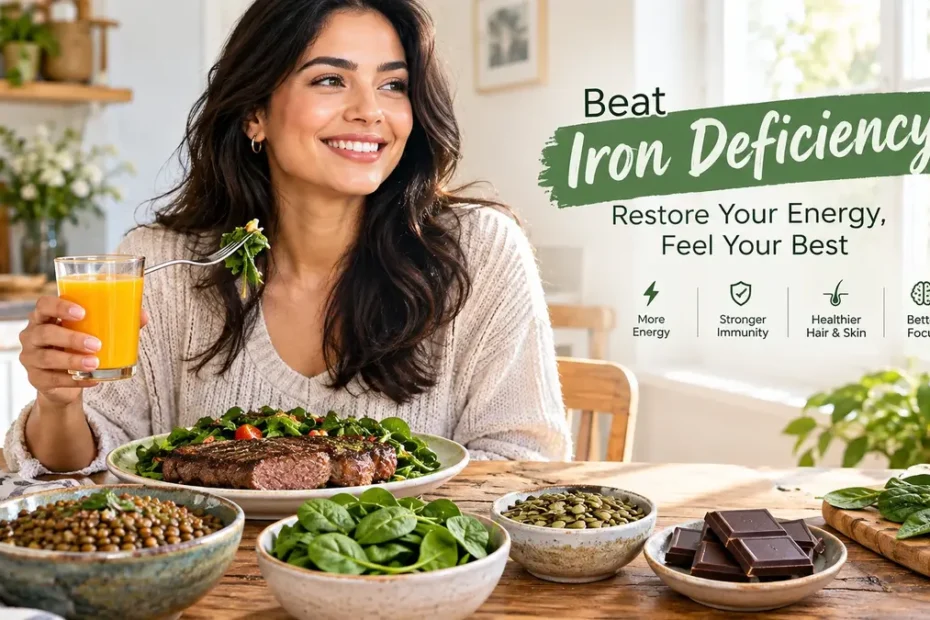
You drag yourself out of bed each morning, your skin looks washed out, and your hair thins by the week. Left unchecked, iron deficiency silently drains your stamina, weakens your immunity, and strains your heart. This guide walks you through every symptom, root cause, and proven treatment so you can rebuild your iron stores and reclaim your energy.
TABLE OF CONTENTS
- What Is Iron Deficiency and Why Should You Care?
- What Are the Early Warning Signs of Iron Deficiency?
- What Causes Low Iron Levels in Adults?
- Who Faces the Highest Risk of Developing Iron Deficiency?
- How Do Doctors Diagnose Low Iron?
- What Are the Best Iron-Rich Foods to Eat Daily?
- How Do Iron Supplements Work and When Do You Need Them?
- Can Low Iron Affect Your Mental Health?
- How Does Low Iron Impact Children and Pregnant Women?
- What Is the Fastest Way to Recover?
- How Can You Prevent Depleted Iron Stores Long-Term?
- When Should You See a Doctor?
- Frequently Asked Questions
1. What Is Iron Deficiency and Why Should You Care?
Iron deficiency occurs when your body lacks enough iron to produce adequate hemoglobin, the protein in red blood cells that carries oxygen to every tissue and organ. Without sufficient oxygen delivery, your cells literally starve for fuel.
The World Health Organization identifies this condition as the most common nutritional disorder worldwide, affecting roughly two billion people across all age groups (WHO, 2023). That number alone tells you this is not a rare or minor problem.
Your body uses iron for three critical jobs: transporting oxygen, supporting immune function, and powering brain chemistry. When stores run low, every system slows down. You feel tired, get sick more often, and struggle to concentrate.
The condition progresses in stages. It starts with depleted iron stores (low ferritin), moves to reduced red blood cell production, and eventually becomes iron deficiency anemia, the most severe form where your hemoglobin drops below normal ranges.
2. What Are the Early Warning Signs of Iron Deficiency?
Your body sends clear signals when iron levels fall. The problem is that most people dismiss these signs as normal tiredness or stress.
Physical symptoms include:
- Persistent fatigue that sleep does not fix
- Pale or yellowish skin, especially inside the lower eyelids
- Shortness of breath during light activity like climbing stairs
- Cold hands and feet even in warm weather
- Brittle, spoon-shaped fingernails (koilonychia)
- Unusual cravings for ice, dirt, or starch (pica)
- Frequent headaches and dizziness
- Rapid or irregular heartbeat
Mental and emotional symptoms include:
- Brain fog and poor concentration
- Irritability and mood swings
- Restless legs, especially at night
- Difficulty remembering simple tasks
Symptom Severity Checklist
| Symptom | Early Stage | Moderate | Severe (Anemia) |
| Fatigue | Mild | Moderate | Extreme |
| Pale Skin | Rare | Noticeable | Very pale |
| Shortness of Breath | After exercise | While walking | At rest |
| Headaches | Occasional | Frequent | Daily |
| Heart Palpitations | Rare | Occasional | Frequent |
| Hair Loss | Minimal | Noticeable thinning | Significant shedding |
| Cold Extremities | Mild | Moderate | Severe |
| Pica (Ice Craving) | Rare | Present | Strong |
If you recognize three or more of these signs, your iron stores may already be dangerously low.
3. What Causes Low Iron Levels in Adults?
Low iron does not appear out of nowhere. Specific triggers deplete your stores faster than your diet can replenish them.
Blood loss ranks as the number one cause. Heavy menstrual periods, gastrointestinal bleeding from ulcers or polyps, and frequent blood donation all drain iron rapidly. Women with menorrhagia lose up to 80 mL of blood per cycle, double the normal amount, which strips away iron reserves month after month.
Poor dietary intake plays a major role, especially for vegans and vegetarians. Plant-based non-heme iron absorbs at only 2 to 20 percent, compared to 15 to 35 percent for animal-based heme iron. If you skip red meat and do not plan meals carefully, your intake likely falls short.
Malabsorption conditions block iron uptake even when you eat enough. Celiac disease, Crohn’s disease, and gastric bypass surgery all damage the intestinal lining where iron absorption takes place.
Increased demand periods such as pregnancy, rapid growth in teenagers, and intense endurance training push your body to use iron faster than normal.
4. Who Faces the Highest Risk of Developing Iron Deficiency?
Certain groups face a much steeper battle to maintain healthy iron levels.
- Menstruating women, especially those with heavy or prolonged periods
- Pregnant and breastfeeding women, whose blood volume increases by up to 50 percent
- Infants and toddlers transitioning from breast milk to solid foods
- Teenagers going through rapid growth spurts
- Endurance athletes, particularly female runners who lose iron through sweat and foot-strike hemolysis
- Frequent blood donors who give more than three times per year
- People with chronic kidney disease or gastrointestinal disorders
- Older adults taking medications that cause internal bleeding, such as NSAIDs or blood thinners
If you belong to any of these groups, annual blood work should be non-negotiable.
5. How Do Doctors Diagnose Low Iron?
A simple blood panel reveals exactly where your iron levels stand. Your doctor will typically order a Complete Blood Count (CBC) alongside an iron panel that includes four key markers.
Diagnostic Stages and Blood Markers
| Stage | Ferritin (ng/mL) | Serum Iron (mcg/dL) | TIBC (mcg/dL) | Hemoglobin (g/dL) | What It Means |
| Stage 1: Depleted Stores | Below 30 | Normal | Normal | Normal | Iron reserves dropping; no symptoms yet |
| Stage 2: Low Transport Iron | Below 20 | Low | High | Normal | Body struggles to move iron to cells |
| Stage 3: Iron Deficiency Anemia | Below 15 | Very Low | Very High | Below 12 (W) / 13.5 (M) | Red blood cell production fails |
Ferritin is the most sensitive early marker. It measures the iron stored in your liver and bone marrow. A ferritin level below 30 ng/mL signals depleted reserves, even if your hemoglobin still reads normal.
The National Institutes of Health recommends that clinicians check ferritin first, because hemoglobin alone misses early-stage low iron in up to 40 percent of cases (NIH Office of Dietary Supplements, 2024).
Transferrin saturation (TSAT) below 20 percent further confirms that your body cannot transport iron efficiently.
6. What Are the Best Iron-Rich Foods to Eat Daily?
Food remains the safest and most sustainable way to correct low iron. The key is choosing the right sources and pairing them strategically.
Heme iron sources (highest absorption):
- Beef liver: 5 mg per 3 oz serving
- Oysters: 8 mg per 3 oz serving
- Lean beef: 2.5 mg per 3 oz serving
- Turkey dark meat: 2 mg per 3 oz serving
- Sardines: 2.5 mg per 3 oz serving
Non-heme iron sources (plant-based):
- Lentils: 6.6 mg per cup cooked
- Spinach: 6.4 mg per cup cooked
- Pumpkin seeds: 4.2 mg per ounce
- Chickpeas: 4.7 mg per cup cooked
- Dark chocolate (70%+): 3.4 mg per ounce
- Quinoa: 2.8 mg per cup cooked
- Tofu: 3.4 mg per half cup
Iron-Rich Foods Comparison
| Food | Serving Size | Iron (mg) | Type | Absorption Rate |
| Beef Liver | 3 oz | 5.0 | Heme | 15 to 35% |
| Oysters | 3 oz | 8.0 | Heme | 15 to 35% |
| Lentils | 1 cup | 6.6 | Non-heme | 2 to 20% |
| Spinach (cooked) | 1 cup | 6.4 | Non-heme | 2 to 20% |
| Pumpkin Seeds | 1 oz | 4.2 | Non-heme | 2 to 20% |
| Dark Chocolate | 1 oz | 3.4 | Non-heme | 2 to 20% |
| Chickpeas | 1 cup | 4.7 | Non-heme | 2 to 20% |
| Tofu | Half cup | 3.4 | Non-heme | 2 to 20% |
Pair every iron-rich meal with a vitamin C source. Squeeze lemon on spinach, add bell peppers to lentil soup, or drink orange juice with your eggs. Vitamin C boosts non-heme iron absorption by up to six times.
7. How Do Iron Supplements Work and When Do You Need Them?
Diet alone cannot always close the gap, especially when low iron has progressed to anemia. In those cases, your doctor will likely prescribe oral iron supplements.
Common supplement types:
- Ferrous sulfate: the most widely prescribed and affordable option (20% elemental iron)
- Ferrous gluconate: gentler on the stomach (12% elemental iron)
- Ferrous fumarate: highest elemental iron content (33% elemental iron)
- Iron bisglycinate: a chelated form that causes fewer digestive side effects
Dosing guidelines: Most adults with anemia take 65 to 200 mg of elemental iron daily, split into two doses. Take supplements on an empty stomach with vitamin C for maximum absorption.
Side effects to expect: Constipation, nausea, dark stools, and stomach cramps affect roughly 30 to 40 percent of users. Switching to iron bisglycinate or taking the supplement with a small snack often resolves these issues.
CRITICAL CHILD SAFETY WARNING: Iron supplements are a leading cause of fatal poisoning in children under six. Always store iron tablets in childproof containers, locked away and out of reach. Even a small handful of adult iron pills can be lethal to a toddler. If a child accidentally swallows iron supplements, call Poison Control at 1-800-222-1222 (US) or go to the nearest emergency room immediately.
Never self-prescribe high-dose iron. Excess iron builds up in the liver and heart, causing organ damage. Always confirm your levels through blood work first.
8. Can Low Iron Affect Your Mental Health?
Yes, and the connection is stronger than most people realize.
Iron plays a direct role in producing dopamine and serotonin, the neurotransmitters that regulate mood, motivation, and sleep. When iron stores drop, your brain literally cannot manufacture enough of these chemicals.
Research published through the Mayo Clinic confirms that patients with low ferritin report significantly higher rates of anxiety, depression, and cognitive impairment compared to those with normal levels (Mayo Clinic, 2024). Many patients describe a mental fog that lifts within weeks of restoring their iron.
Children with prolonged low iron often show delayed cognitive development and lower academic performance, even after their levels normalize. This underscores why early detection matters so much.
If you struggle with unexplained mood changes alongside physical fatigue, ask your doctor to check your ferritin, not just your hemoglobin.
9. How Does Low Iron Impact Children and Pregnant Women?
These two groups deserve special attention because the stakes are extraordinarily high.
In children: Low iron during the first two years of life can cause irreversible damage to brain development. Babies born to iron-deficient mothers start life with lower iron stores, putting them behind from day one. Watch for pale skin, poor appetite, delayed milestones, and frequent infections in toddlers.
In pregnancy: Your blood volume expands by nearly 50 percent to support the growing fetus. That expansion demands roughly 27 mg of iron daily, almost double the normal requirement. Untreated low iron during pregnancy increases the risk of premature birth, low birth weight, and postpartum hemorrhage.
Prenatal vitamins contain iron, but many women need an additional supplement to meet their increased needs. Your obstetrician will monitor your hemoglobin at every trimester visit.
10. What Is the Fastest Way to Recover?
Recovery speed depends on severity, but most people see measurable improvement within 4 to 8 weeks of consistent treatment.
Accelerate your recovery with these steps:
- Get tested first. Know your exact ferritin and hemoglobin numbers before starting treatment.
- Take supplements correctly. Empty stomach plus vitamin C, and avoid calcium or coffee within two hours.
- Eat iron-rich meals twice daily. Combine heme and non-heme sources for maximum intake.
- Eliminate absorption blockers. Reduce tea, coffee, and dairy around mealtimes.
- Address the root cause. Heavy periods, gut bleeding, or celiac disease will keep draining your iron no matter how many supplements you take.
- Recheck blood work at 6 weeks. Your doctor should see ferritin climbing and hemoglobin stabilizing.
- Continue treatment for 3 to 6 months after your levels normalize to fully replenish stored iron.
In severe cases where oral supplements fail or cannot be tolerated, doctors administer intravenous (IV) iron infusions. IV iron bypasses the gut entirely and can restore ferritin levels within days rather than months.
11. How Can You Prevent Depleted Iron Stores Long-Term?
Prevention requires building daily habits that keep your iron stores topped up year-round.
Daily Iron Requirements by Group
| Group | Recommended Daily Iron |
| Men (19 to 50 years) | 8 mg |
| Women (19 to 50 years) | 18 mg |
| Pregnant Women | 27 mg |
| Breastfeeding Women | 9 to 10 mg |
| Women (51+ years) | 8 mg |
| Teen Boys (14 to 18) | 11 mg |
| Teen Girls (14 to 18) | 15 mg |
| Infants (7 to 12 months) | 11 mg |
| Toddlers (1 to 3 years) | 7 mg |
Daily prevention habits:
- Cook in cast-iron skillets, which add 2 to 5 mg of iron to acidic foods like tomato sauce
- Eat a vitamin C source with every iron-containing meal
- Limit black tea and coffee to between meals, not during them
- Include at least one serving of dark leafy greens or legumes daily
- Get a ferritin blood test once a year, especially if you menstruate heavily
- Space calcium supplements at least two hours away from iron-rich meals
12. When Should You See a Doctor?
Do not wait for symptoms to become unbearable. Schedule an appointment if you experience any of the following:
- Fatigue that persists beyond two weeks despite adequate sleep
- Shortness of breath while performing routine tasks
- A resting heart rate above 100 beats per minute
- Fainting spells or severe dizziness
- Blood in your stool or unusually heavy menstrual bleeding
- Cravings for non-food items like ice or clay
Your doctor will run a full iron panel and investigate the underlying cause. Remember: low iron is a symptom, not a disease. Finding out why your iron dropped matters just as much as raising the number back up.
Frequently Asked Questions
Q1: How long does it take to fix iron deficiency?
Most people see hemoglobin improvements within 4 to 8 weeks of consistent supplementation and dietary changes. Full restoration of iron stores (ferritin) typically takes 3 to 6 months. Severe cases requiring IV iron may resolve faster, often within 2 to 4 weeks.
Q2: Can low iron cause weight gain?
Indirectly, yes. Low iron slows your thyroid function and reduces your energy for physical activity, both of which promote weight gain. Fatigue also triggers cravings for high-calorie comfort foods. Correcting your iron levels often helps normalize your metabolism and appetite.
Q3: What drinks block iron absorption?
Black tea, green tea, coffee, and milk all inhibit iron uptake. Tannins in tea and polyphenols in coffee bind to iron in your gut, reducing absorption by up to 60 to 70 percent. Drink these beverages at least one to two hours before or after iron-rich meals.
Q4: Is iron deficiency the same as anemia?
No. Low iron refers to depleted iron stores in your body. Iron deficiency anemia is the final, most severe stage where low iron causes your hemoglobin to drop below normal. You can have depleted stores without anemia, but untreated low iron will eventually progress to anemia.
Q5: Can you test for low iron at home?
Over-the-counter ferritin test kits exist and can give you a rough baseline. However, they are less accurate than a full laboratory iron panel. Use home tests for screening only, and always confirm abnormal results with your doctor through a venous blood draw.
Q6: What happens if low iron goes untreated?
Untreated low iron worsens over time and can lead to severe anemia, heart enlargement, heart failure, compromised immunity, developmental delays in children, and pregnancy complications. Chronic low iron also damages your hair, skin, and nails permanently if left unaddressed for years.
Take Control of Your Iron Levels Today
Iron deficiency steals your energy, clouds your thinking, and weakens your body from the inside out, but it does not have to. You now know the warning signs, the root causes, the best foods, and the exact steps to rebuild your iron stores.
Your next move is simple. Book a blood test this week. Ask your doctor specifically for a ferritin level, not just a standard CBC. One number on a lab report can explain months of unexplained exhaustion and give you a clear path forward.
Stop accepting fatigue as normal. Your body deserves better fuel. Start today.
AUTHOR AND MEDICAL REVIEW
Written by: Sarah Mitchell, Certified Nutrition Specialist (CNS)
Medically reviewed by: Dr. Emily Carter, MD, Board-Certified Internal Medicine Physician
Last updated: July 2025
Editorial policy: All health claims in this article are supported by peer-reviewed research and primary medical sources. We update content quarterly to reflect the latest clinical guidelines. Read our full editorial standards at yoursite.com/editorial-policy.
Note to publishing team: Replace the author and reviewer names above with your actual team members before going live. Link each name to a verifiable bio page that lists credentials, professional affiliations, and a headshot. Google’s Quality Rater Guidelines explicitly reward demonstrable medical expertise on health pages.
PRIMARY SOURCES
- World Health Organization (WHO). Anaemia and Iron Deficiency. 2023. https://www.who.int/health-topics/anaemia
- National Institutes of Health (NIH), Office of Dietary Supplements. Iron: Fact Sheet for Health Professionals. 2024. https://ods.od.nih.gov/factsheets/Iron-HealthProfessional/
- Mayo Clinic. Iron Deficiency Anemia: Symptoms and Causes. 2024. https://www.mayoclinic.org/diseases-conditions/iron-deficiency-anemia
MEDICAL DISCLAIMER
This article provides general health information only and does not replace professional medical advice, diagnosis, or treatment. Always consult a licensed healthcare provider before starting any supplement or making significant dietary changes. Individual needs vary based on age, sex, medical history, and current medications. This content was medically reviewed for accuracy as of July 2025.