Written by Sarah Mitchell | Home Cook & Certified Nutrition Coach
Sarah has spent 12 years testing breakfast recipes in her own kitchen and holds a Precision Nutrition Level 1 certification. She writes about practical, real-food meals that fit into busy mornings. Her oatmeal method has been refined through thousands of bowls — and plenty of early failures.
You pour yourself a bowl of oatmeal, take one bite, and immediately regret it — gluey, bland, and utterly forgettable. Sound familiar? Most home cooks struggle with mushy texture and zero flavor because they skip a few critical steps. The good news? Learning how to make oatmeal the right way takes under ten minutes and transforms your mornings completely.
Jump to Section
- What Is Oatmeal and Why Eat It
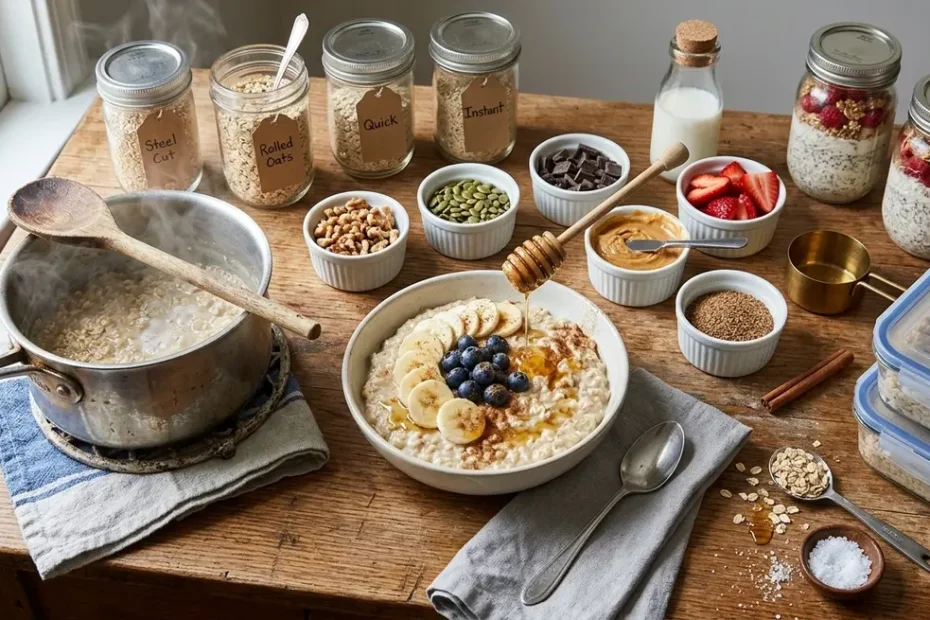
- Types of Oats Compared
- Ingredients You Need
- Equipment You’ll Need
- Stovetop Method (Step-by-Step)
- Microwave Method
- Overnight Oats (No-Cook)
- Liquid-to-Oats Ratio Guide
- Best Toppings
- Oatmeal for Weight Loss
- Common Mistakes to Avoid
- Meal Prep for the Week
- Oatmeal vs. Other Cereals
- Storage and Reheating
- FAQs
Quick Recipe at a Glance
| Detail | Info |
| Prep Time | 1 minute |
| Cook Time | 5–10 minutes (rolled oats) |
| Total Time | 6–11 minutes |
| Servings | 1 bowl |
| Difficulty | Beginner |
| Best Oat Type | Old-fashioned rolled oats |
What Is Oatmeal and Why Should You Eat It Every Morning?
Oatmeal is a warm whole-grain porridge made by simmering oats in water, milk, or a dairy-free alternative. It ranks among the most nutrient-dense breakfast options you can put on your table.
A single cup of cooked oats delivers roughly 150 calories, 4 grams of fiber, and 6 grams of protein, according to the USDA FoodData Central. That fiber comes largely from beta-glucan, a soluble type that supports healthy cholesterol levels.
The American Heart Association recommends whole grains like oats as a cornerstone of a heart-healthy diet. Eating oatmeal regularly may lower your risk of cardiovascular disease over time.
Oatmeal also keeps you full far longer than sugary cereals. The slow-digesting complex carbohydrates stabilize blood sugar and prevent that mid-morning energy crash that sends you reaching for a donut by 10 a.m.
Which Type of Oats Works Best for Breakfast?
Not all oats behave the same way in your pot. The variety you choose directly affects cook time, texture, and nutritional payoff. I tested every type side by side before settling on rolled oats for daily use.
| Oat Type | Texture | Cook Time | Processing Level | Best For |
| Steel-Cut Oats | Chewy, nutty | 20–30 min | Least processed | Hearty, filling bowls |
| Rolled Oats (Old-Fashioned) | Soft, creamy | 5–10 min | Steamed and flattened | Everyday stovetop oatmeal |
| Quick Oats | Smooth, soft | 1–3 min | Thinner flakes | Rushed weekday mornings |
| Instant Oats | Very soft, mushy | 60 seconds | Pre-cooked and dried | Emergency breakfast only |
| Oat Groats | Dense, grain-like | 45–60 min | Whole kernel | Weekend meal-prep batches |
Steel-cut oats retain the most texture and take the longest to cook. Rolled oats hit the sweet spot between convenience and quality for most people.
Brands like Bob’s Red Mill and Quaker Oats offer all these varieties. Pick the type that matches your morning schedule and texture preference.
What Ingredients Do You Need?
The beauty of learning how to make oatmeal lies in its simplicity. You only need a handful of ingredients to build a satisfying bowl.
Core ingredients:
- ½ cup oats (any variety from the table above)
- 1 cup liquid (water, whole milk, almond milk, or oat milk)
- A small pinch of salt — this is non-negotiable for flavor
Optional flavor boosters:
- 1 teaspoon honey or pure maple syrup
- ½ teaspoon ground cinnamon
- ¼ teaspoon vanilla extract
- 1 tablespoon chia seeds or ground flaxseed
The salt amplifies the natural nuttiness of the oats. Skipping it is the single biggest reason homemade oatmeal tastes flat and disappointing.
Equipment You’ll Need
You do not need fancy gadgets. Here is what I use every single morning:
- Small saucepan (1–2 quart size works perfectly for one serving)
- Wooden spoon or silicone spatula for stirring
- Measuring cups (or just use the same mug for oats and liquid)
- Microwave-safe bowl (if using the microwave method — make it larger than you think you need)
- Mason jars with lids (for overnight oats)
That is it. No special oatmeal maker required. A basic pot and a spoon will get you a perfect bowl every time.
How to Make Oatmeal on the Stovetop (Step-by-Step)
The stovetop method gives you the most control over texture. This is the gold standard for cooking oatmeal that tastes restaurant-quality at home.
Step 1: Bring your liquid to a gentle boil in a small saucepan over medium-high heat.
Step 2: Stir in the oats and reduce the heat to low immediately.
Step 3: Simmer uncovered, stirring occasionally, for 5 to 10 minutes depending on your oat type.
Step 4: Remove from heat when the oats have absorbed most of the liquid but still look slightly wet on the surface. They will continue thickening in the bowl as they cool.
Step 5: Add your sweetener, spices, and toppings. Let the bowl rest for two minutes before eating.
Pro tip from my kitchen: Toast your dry oats in the saucepan for 60 seconds before adding any liquid. This simple step deepens the flavor dramatically and adds a subtle nuttiness you cannot get any other way.
How to Make Oatmeal in the Microwave for Busy Mornings
Microwave oatmeal gets an unfair bad reputation. It works perfectly when you follow the right technique, and it saves precious minutes on hectic weekday mornings.
Combine ½ cup rolled oats and 1 cup liquid in a large microwave-safe bowl. Use a bowl much bigger than you think you need — oatmeal bubbles up aggressively and overflows easily. I learned this the hard way on a Monday morning with a brand-new countertop.
Microwave on high for 90 seconds. Pull the bowl out, stir well, then microwave for another 30 to 60 seconds.
Watch the bowl closely during the second round. The moment the surface starts to rise, stop the microwave. Stir in your toppings and eat immediately.
How to Make Overnight Oats Without Cooking
Overnight oats eliminate morning cooking entirely. You prepare them the night before and grab a cold, creamy jar straight from the fridge.
Combine ½ cup rolled oats, ½ cup milk, ¼ cup Greek yogurt, and 1 tablespoon chia seeds in a mason jar. Stir everything together, seal the lid, and refrigerate for at least six hours.
The oats absorb the liquid overnight and soften into a pudding-like consistency. In the morning, top with fresh berries, a drizzle of honey, and a handful of crushed walnuts.
This method works best with rolled oats. Steel-cut oats stay too hard without heat, and instant oats turn into an unappetizing mush.
What Is the Best Liquid-to-Oats Ratio for Creamy Results?
Getting the ratio wrong is the fastest way to ruin your bowl. Too much liquid creates soup. Too little creates cement. After testing dozens of batches, here are the ratios I rely on.
| Oat Type | Oats | Liquid | Result |
| Steel-Cut | 1 cup | 3–4 cups | Creamy, loose |
| Rolled | 1 cup | 2 cups | Thick, creamy |
| Quick | 1 cup | 1.5 cups | Soft, smooth |
| Instant | 1 packet | ¾ cup | Very soft |
For the creamiest stovetop oatmeal, use a 50/50 blend of water and whole milk. The water cooks the oats evenly, while the milk adds richness and body.
If you prefer a dairy-free option, oat milk and coconut milk both produce excellent creaminess. Almond milk works but yields a noticeably thinner result.
Which Toppings Turn Plain Oatmeal Into a Gourmet Breakfast?
Toppings are where oatmeal goes from boring to extraordinary. Think of your base oats as a blank canvas and layer flavors strategically.
Fruit layer:
- Sliced bananas and fresh blueberries
- Diced mango and toasted coconut flakes
- Grated apple with a squeeze of lemon
Crunch layer:
- Chopped pecans or almonds
- Pumpkin seeds or sunflower seeds
- Homemade granola clusters
Sweetness layer:
- Pure maple syrup or raw honey
- Date paste or mashed ripe banana
- A square of dark chocolate melted on top
Spice layer:
- Ground cinnamon and nutmeg
- Cardamom and a pinch of ginger
- Cocoa powder and espresso powder
Rotate your combinations throughout the week to prevent flavor fatigue. A peanut butter and banana bowl on Monday feels completely different from a berry-almond bowl on Wednesday.
How to Make Oatmeal for Weight Loss and Better Health
Oatmeal supports weight management when you build your bowl intentionally. The beta-glucan fiber slows digestion and keeps hunger hormones in check for hours.
The Harvard T.H. Chan School of Public Health highlights whole grains as a key component of long-term weight control. Oats rank at the top of that category.
Stick to plain rolled or steel-cut oats and avoid pre-flavored instant packets loaded with added sugar. A single flavored packet can contain 12 to 15 grams of sugar — nearly half the daily recommended limit.
Sweeten your bowl naturally with fresh fruit and a small drizzle of honey. Add protein through Greek yogurt, a scoop of protein powder, or a tablespoon of nut butter to increase satiety and keep cravings at bay until lunch.
What Common Mistakes Ruin Your Oatmeal Every Time?
Even experienced home cooks fall into these traps. Fixing them will immediately improve your morning bowl.
- Skipping the salt. A tiny pinch unlocks the natural flavor of the oats. Without it, everything tastes flat and one-dimensional.
- Using only water. Water alone produces a thin, bland porridge. Mix in at least some milk for body and richness.
- Overcooking the oats. Mushy oatmeal means you cooked it too long or used too much liquid. Pull the pot off the heat when the oats still look slightly loose.
- Adding toppings too early. Stir in delicate fruits and nuts after cooking. Heat destroys the crunch and turns fresh berries into jam.
- Choosing the wrong oat type for your method. Steel-cut oats need 25 minutes on the stove. Tossing them in the microwave for two minutes will leave you with crunchy, inedible grains.
How to Meal Prep Oatmeal for the Entire Week
Meal-prepping oatmeal saves enormous time on weekday mornings. You cook a large batch on Sunday and portion it into individual containers.
Cook 2 cups of rolled oats with 4 cups of liquid on the stovetop. Let the batch cool completely, then divide it into five airtight containers.
Store the containers in the refrigerator for up to five days. Each morning, scoop one portion into a bowl, add a splash of milk, and reheat in the microwave for 60 to 90 seconds.
Add fresh toppings after reheating. Pre-sliced fruit will turn brown and soggy if it sits in the oatmeal all week. Keep your berries and nuts separate until serving time.
How Does Oatmeal Compare to Other Popular Breakfast Cereals?
Oatmeal outperforms most boxed cereals in nearly every nutritional category. Here is a side-by-side comparison per standard serving.
| Breakfast Option | Calories | Fiber | Protein | Added Sugar |
| Rolled Oatmeal (plain) | 150 | 4g | 6g | 0g |
| Corn Flakes | 150 | 1g | 2g | 2g |
| Granola (store-bought) | 210 | 3g | 4g | 11g |
| Frosted Flakes | 170 | 1g | 1g | 12g |
| Greek Yogurt Parfait | 180 | 2g | 12g | 8g |
Oatmeal delivers the highest fiber with zero added sugar when prepared plain. That combination makes it the superior choice for sustained energy and digestive health.
Storage and Reheating Tips
Cooked oatmeal stores well in the refrigerator for up to five days in an airtight container. The texture will thicken significantly as it cools, which is completely normal.
When reheating, add 2 to 3 tablespoons of milk or water per serving before microwaving. This restores the creamy consistency you had on day one.
You can also freeze individual portions for up to three months. Thaw overnight in the fridge and reheat with a splash of liquid the next morning.
Detailed Chapter Summary Table
| Chapter | Key Takeaway | Best Oat Type | Cook Time |
| Stovetop Method | Maximum texture control | Rolled or steel-cut | 5–30 min |
| Microwave Method | Fastest hot option | Rolled or quick | 2–3 min |
| Overnight Oats | Zero morning effort | Rolled only | 6+ hours (cold) |
| Meal Prep | Batch cook for the week | Rolled | 10 min (batch) |
| Weight Loss Bowl | High fiber, low sugar | Steel-cut | 20–25 min |
| Toppings Strategy | Layer fruit, crunch, spice | Any | N/A |
| Storage | Fridge 5 days, freezer 3 months | Any (pre-cooked) | 90 sec reheat |
Frequently Asked Questions
1. How long does it take to cook oatmeal?
Rolled oats cook in 5 to 10 minutes on the stovetop. Steel-cut oats require 20 to 30 minutes. Instant oats take about 60 seconds with hot water.
2. Can you make oatmeal with water instead of milk?
Yes. Water works fine, but the result will be thinner and less flavorful. For the best taste, use a 50/50 mix of water and milk or a creamy plant-based alternative like oat milk.
3. Is oatmeal gluten-free?
Oats are naturally gluten-free, but cross-contamination during processing is common. Buy oats labeled “certified gluten-free” from brands like Bob’s Red Mill if you have celiac disease or gluten sensitivity.
4. Can babies eat oatmeal?
Yes. Pediatricians often recommend iron-fortified oat cereal as a first food for infants around six months of age. Blend cooked oats with breast milk or formula to create a smooth, thin consistency.
5. How many calories are in a bowl of oatmeal?
A plain half-cup serving of dry rolled oats contains approximately 150 calories. Toppings like nut butter, honey, and fruit will increase the total to roughly 250–350 calories per bowl.
6. Can you reheat oatmeal the next day?
Absolutely. Add a splash of milk or water to the cold oatmeal and microwave for 60 to 90 seconds, stirring halfway through. The added liquid restores the creamy texture beautifully.
Health Disclaimer
This article provides general nutritional information and cooking guidance only. It does not constitute medical advice. Individuals with specific dietary restrictions, allergies, diabetes, or other health conditions should consult a licensed healthcare professional or registered dietitian before making significant changes to their diet. Nutritional values mentioned are approximate and may vary based on brands, portion sizes, and preparation methods.
Start Making Better Oatmeal Tomorrow Morning
You now have every tool you need to build a bowl of oatmeal that actually excites you. The stovetop method gives you full control. The microwave method saves you time. Overnight oats handle the prep work while you sleep.
Pick one method tonight. Grab your oats, your favorite milk, and a pinch of salt. Tomorrow morning, you will eat a breakfast that fuels your body and genuinely tastes good.
Drop your favorite oatmeal combination in the comments below — your idea might become someone else’s new Monday morning ritual.