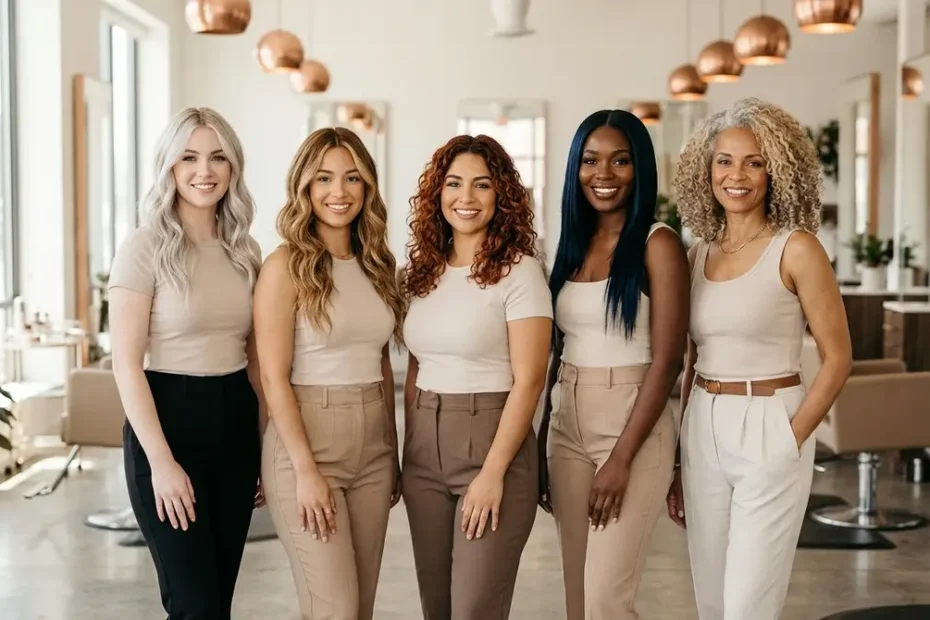
You scroll through thousands of salon photos but still cannot decide which shade suits you. Choosing the wrong tone drains your wallet and leaves you hiding under hats for weeks. These hand-picked hair color ideas match every skin tone, eye color, and maintenance preference so you sit in the stylist’s chair knowing exactly what to ask for.
⚕️ Health & Safety Disclaimer: Hair dyes and lightening products contain chemical agents — including ammonia, peroxide, and paraphenylenediamine (PPD) — that may trigger allergic reactions, contact dermatitis, or scalp burns. Always perform a patch test at least 48 hours before any coloring service. Pregnant or nursing individuals should consult an obstetrician before using chemical hair treatments. This guide provides educational information only and does not substitute professional medical or cosmetology advice.
What Are the Best Hair Color Ideas for Your Skin Tone?
Your undertone — not your surface skin color — determines which shades make you look vibrant and which make you look washed out. Most people confuse the two, which explains why a shade that looks stunning on your friend might fall flat on you.
Master colorist Tracey Cunningham, whose client list includes A-list celebrities at Meche Salon in Los Angeles, consistently advises clients to match dye to their undertone first and their personal style second. Getting this single detail right eliminates the majority of color regrets.
The 3-Step Quick Undertone Test (Do This Right Now)
Before you browse any more hair color ideas, grab a mirror and natural daylight. These three at-home tests take under two minutes and give you a reliable undertone reading.
Step 1 — The White Paper Test: Hold a blank white sheet next to your bare, makeup-free face near a window. Pinkish or rosy skin signals cool undertones. Yellowish or peachy skin points to warm undertones. If you genuinely cannot tell, you likely carry neutral undertones.
Step 2 — The Jewelry Test: Press a silver ring and a gold ring against the inside of your wrist. Silver flatters cool undertones. Gold enhances warm undertones. Both metals looking equally great means you sit in the neutral camp.
Step 3 — The Sun Reaction Test: Recall how your bare skin handles direct summer sun. Burning quickly with minimal tanning indicates cool undertones. Tanning easily with rare burns suggests warm undertones. A combination of both points to neutral.
| Skin Undertone | Vein Color | Jewelry Match | Best Shade Families | Shades to Skip |
| Cool | Blue or purple | Silver | Ash blonde, platinum, cool brown, burgundy, blue-black | Golden blonde, copper, warm caramel |
| Warm | Green or olive | Gold | Honey blonde, caramel, auburn, golden brown, toffee | Icy platinum, ash brown, silver |
| Neutral | Blue-green mix | Both metals | Nearly every shade family | Extremely stark jet black |
| Olive | Teal-green | Gold | Mocha, chestnut, warm balayage, mahogany | Bright orange-red, overly ashy tones |
The American Academy of Dermatology recommends patch-testing any new hair dye product at least 48 hours before full application, regardless of whether you have used the brand before (aad.org).
Which Hair Color Ideas Work Best for Warm Undertones?
Warm undertones glow alongside golden, earthy, and sun-kissed shades. Honey, caramel, toffee, and warm chestnut sit at the top of the list for good reason — they mirror the natural warmth already present in your skin.
A caramel balayage melts seamlessly into dark brown bases and grows out without a harsh line. This makes it one of the most forgiving options for anyone who cannot visit the salon every four weeks.
Copper and strawberry blonde also flatter warm skin beautifully. These red-gold shades pull out the amber flecks in brown and hazel eyes, creating a look that photographs exceptionally well.
- Honey blonde: Delivers a sun-kissed, low-maintenance glow
- Caramel highlights: Adds warmth and depth to brunette bases
- Warm auburn: Creates a striking contrast on medium to deep skin
- Golden brown: A universally safe pick for first-time color clients
- Toffee balayage: Blends rich warmth through mid-lengths and ends
Stay away from icy platinum or silver tones. These cool shades clash with warm skin and can make your complexion appear sallow or fatigued.
| Warm Shade | Best Base Color | Fade Pattern | Touch-Up Window |
| Honey Blonde | Light to medium brown | Gradual, warm | 8–10 weeks |
| Caramel Balayage | Dark brown | Seamless grow-out | 12–16 weeks |
| Warm Auburn | Medium to dark brown | Fades to copper | 6–8 weeks |
| Golden Brown | Any brown base | Very gradual | 10–12 weeks |
| Toffee Highlights | Dark brown to black | Soft, blended | 10–14 weeks |
What Hair Color Ideas Suit Cool Undertones Perfectly?
Cool undertones pair naturally with ash-based, icy, and jewel-toned shades. Platinum blonde, ash brown, cool burgundy, and blue-black consistently rank as the most requested cool-toned transformations in salons nationwide.
Icy shades counteract surface redness in fair skin, creating a clean, porcelain-like effect. On deeper cool skin tones, rich espresso or blue-black delivers a dramatic, high-contrast look that commands attention.
Celebrity colorist Rachel Bodt of Suite Caroline in New York City notes that cool-toned clients often need more frequent toning appointments because ash pigments fade faster than warm pigments. The smaller molecular structure of cool dye molecules allows them to wash out of the hair cuticle more quickly.
| Cool Shade | Ideal Skin Depth | Maintenance Level | Expected Longevity |
| Platinum Blonde | Fair to light | High — toner every 4–6 weeks | 4–6 weeks |
| Ash Brown | Light to medium | Medium | 6–8 weeks |
| Cool Burgundy | Medium to deep | Medium-High | 5–7 weeks |
| Silver / Chrome | Fair to medium | Very High — purple shampoo weekly | 3–5 weeks |
| Blue-Black | Deep cool | Low | 8–10 weeks |
| Icy Beige Blonde | Fair to light | High | 5–7 weeks |
How Do You Choose Hair Color Ideas Based on Eye Color?
Your eye color serves as a powerful secondary filter after you identify your skin undertone. The right shade creates a contrast that makes your irises appear brighter and more defined.
Brown eyes handle nearly every shade on the color wheel. Warm caramel and rich auburn bring out hidden golden flecks. Cool espresso deepens the overall contrast for a bold, dramatic frame around the face.
Blue eyes pop against warm copper, strawberry blonde, and soft honey tones. The warm-cool contrast between the hair and the iris creates a striking visual effect that reads beautifully in photographs.
Green eyes look extraordinary alongside auburn, mahogany, and warm red shades. These red-based tones sit directly opposite green on the color wheel, producing the strongest possible complementary contrast.
Hazel eyes shift between green and brown depending on the lighting. Warm caramel highlights pull out the green, while cool mocha lowlights emphasize the brown. A multi-tonal balayage gives you the best of both worlds.
| Eye Color | Top Shade Picks | Shades to Approach Cautiously |
| Brown | Caramel, auburn, espresso, honey | None — brown eyes are the most versatile |
| Blue | Copper, strawberry blonde, warm honey | Overly cool ash (can wash out pale features) |
| Green | Auburn, mahogany, warm red, chestnut | Cool platinum (may overpower light green irises) |
| Hazel | Caramel balayage, golden brown, mocha | Flat single-process dark brown |
What Are the Top Trending Hair Color Ideas Right Now?
This season’s biggest trends favor low-maintenance, lived-in color that grows out gracefully. The era of harsh, all-over single-process dye is winding down as clients demand shades that look expensive with minimal upkeep.
Expensive brunette continues to dominate salon request boards across the country. This technique weaves subtle caramel, toffee, and honey micro-highlights through a rich dark base, creating a glossy, multi-dimensional finish that mimics the natural variation seen in children’s hair.
Cowboy copper blends warm copper with muted brown undertones for a softer, more wearable version of red. It delivers vibrant warmth without the aggressive fading that pure copper demands within the first two weeks.
Mushroom blonde occupies the space between ash blonde and light brown. Its earthy, muted quality flatters cool and neutral skin tones alike and requires significantly fewer toning appointments than traditional platinum.
- Lived-in balayage: Grows out seamlessly for three to four months
- Glazed brunette: A single-tone gloss that adds mirror-like shine to brown hair
- Cherry cola: Deep red-brown with a subtle violet undertone that catches light
- Vanilla butter blonde: Creamy, warm platinum that avoids brassiness
- Suede brunette: Matte, soft brown with zero red or gold warmth
| Trending Shade | Best Undertone | Maintenance | Grow-Out Grace |
| Expensive Brunette | Warm, Neutral | Low | Excellent — 14+ weeks |
| Cowboy Copper | Warm, Neutral | Medium | Good — 8–10 weeks |
| Mushroom Blonde | Cool, Neutral | Medium | Very Good — 10–12 weeks |
| Cherry Cola | Cool, Warm | Medium | Good — 6–8 weeks |
| Vanilla Butter Blonde | Warm, Neutral | High | Fair — 6–8 weeks |
| Suede Brunette | Cool, Neutral | Low | Excellent — 12–16 weeks |
Which Hair Color Ideas Require the Least Maintenance?
Tight schedules and limited salon budgets demand color that looks intentional even after months of grow-out. The golden rule: choose a shade within two levels of your natural base color.
A shadow root or root smudge technique blends your natural regrowth into the colored sections, erasing the harsh line that typically appears around week four. This single adjustment stretches your salon visits from every six weeks to every twelve to sixteen weeks.
| Technique | Touch-Up Frequency | Average Cost | Grow-Out Appearance |
| Full Balayage | Every 12–16 weeks | 150–300 | Seamless, natural |
| Shadow Root Melt | Every 10–14 weeks | 100–200 | Blended, soft |
| Demi-Permanent Gloss | Every 6–8 weeks | 50–100 | Gradual, even fade |
| Traditional Foil Highlights | Every 6–8 weeks | 100–250 | Noticeable regrowth line |
| Ombre | Every 14–20 weeks | 150–300 | Intentional gradient |
| Single-Process Root Touch-Up | Every 4–6 weeks | 60–120 | Sharp line if delayed |
Demi-permanent color fades gracefully over 24 to 28 washes because it deposits pigment on the surface of the hair shaft rather than penetrating the cortex. No harsh root line appears as it fades, making it the lowest-commitment option available.
How Can You Try Bold Hair Color Ideas Without Damage?
Vivid shades like electric blue, pastel lavender, and neon green require pre-lightening, which strips the protective cuticle layer from your hair. You can dramatically reduce breakage by following a structured preparation and aftercare plan.
Start a bond-building regimen two to three weeks before your lightening appointment. Products containing bis-aminopropyl diglycol dimaleate (the active ingredient in Olaplex) or K18’s peptide technology reinforce the disulfide bonds that bleach breaks apart.
Ask your colorist to use a 20-volume developer instead of 30 or 40 volume. The lower-volume formula lifts more slowly, which means less structural trauma to the hair shaft while still reaching the necessary level of lightness.
- Two weeks before: Deep condition with a protein mask twice weekly
- Day of service: Request bond builders mixed directly into the lightener
- First 72 hours after: Avoid washing to let the cuticle seal around the new pigment
- Ongoing: Wash with sulfate-free shampoo in cool water, limit heat styling below 350°F
- Weekly: Apply a reconstructing mask containing hydrolyzed keratin
The U.S. Food and Drug Administration explicitly warns consumers to follow the timing instructions on all hair dye packaging precisely, as exceeding the recommended processing time significantly increases the risk of chemical burns and irreversible hair breakage (fda.gov).
What Hair Color Ideas Look Best on Dark Hair?
Dark hair offers a rich canvas for both subtle shifts and dramatic transformations. You do not always need to reach for bleach to achieve a visible, head-turning change.
Warm mahogany, deep plum, and dark cherry tones deposit beautifully on unbleached dark brown or black hair. These jewel-toned shades add a shimmering, multidimensional quality that catches light without requiring any lifting whatsoever.
For clients who want more contrast, face-framing “money piece” highlights in caramel or honey create an instant brightening effect around the face. This technique processes only a small section of hair, keeping damage minimal while delivering maximum visual impact.
- Dark mocha gloss: Adds warmth and shine without any lightening
- Plum demi-permanent: Deposits a subtle violet sheen on black hair
- Caramel money piece: Brightens the face with just two to four foils
- Warm chestnut balayage: Creates sun-kissed depth on dark brown bases
- Espresso single-process: Deepens and enriches faded dark hair
| Dark Hair Shade | Requires Bleach? | Visible on Black Hair? | Fade Timeline |
| Dark Mocha | No | Yes, in direct light | 8–10 weeks |
| Deep Plum | No | Yes, subtle shimmer | 6–8 weeks |
| Caramel Money Piece | Yes, partial | Yes, high contrast | 8–12 weeks |
| Warm Chestnut | No | Faint on true black | 8–10 weeks |
| Blue-Black | No | Yes, very visible | 10–14 weeks |
Which Hair Color Ideas Complement Gray or Silver Hair?
Embracing natural gray has become one of the most popular beauty movements of the decade. The goal has shifted from covering every silver strand to enhancing them with strategic tone and dimension.
A purple-toned gloss or silver shampoo neutralizes the yellowing that occurs when gray hair oxidizes from UV exposure and hard water minerals. This simple step transforms dull, yellowed gray into bright, intentional silver.
Many women choose to blend their natural gray with soft platinum babylights for a seamless, modern transition. This approach avoids the harsh “helmet” effect of full gray coverage and grows out far more gracefully.
| Gray Hair Goal | Best Technique | Recommended Products |
| Bright, icy silver | Purple gloss treatment | Purple shampoo, silver toning mask |
| Blended transition | Platinum babylights plus natural gray | Bond builder, sulfate-free shampoo |
| Warm dimension | Taupe or sandy lowlights | Color-depositing conditioner in taupe |
| Full coverage | Permanent single-process | Ammonia-free permanent dye, root spray |
How Do Hair Color Ideas Differ for Short vs. Long Hair?
Hair length fundamentally changes how color techniques read to the eye. Short hair exposes every detail of the dye job, while long hair allows for gradual transitions and layered dimension that unfold as the hair moves.
On pixie cuts and cropped bobs, bold single-process colors like vivid red, icy platinum, or jet black make an immediate statement. The short length also means you can experiment with entirely different shades every eight to ten weeks as the hair grows out and gets trimmed.
Long hair benefits enormously from multi-dimensional techniques like balayage, ombre, and babylights. These methods create movement and depth that a flat, single-process application simply cannot replicate on hair that falls below the shoulders.
Medium-length lobs and shags occupy the ideal middle ground. Face-framing highlights, root melts, and money pieces all perform exceptionally well on these versatile, face-shaping cuts.
| Hair Length | Best Techniques | Avoid | Touch-Up Ease |
| Pixie / Buzz | Single-process bold color, vivid fashion shades | Subtle balayage (not enough length) | Very easy — grows out in weeks |
| Bob / Lob | Money piece, face-framing highlights, root melt | Full ombre (too short for gradient) | Easy — 6–8 weeks |
| Medium (Shoulder) | Balayage, babylights, shadow root | None — most versatile length | Moderate — 8–12 weeks |
| Long (Mid-Back+) | Full balayage, ombre, dimensional highlights | Single-process flat color | Requires more product and time |
What Hair Color Ideas Work for First-Timers?
Coloring your hair for the first time feels intimidating, and the fear of ending up with a shade you hate keeps many people stuck in their natural color for years. The solution is to start with low-commitment options that wash out or fade gracefully.
Demi-permanent color deposits tone without lifting your natural pigment. It fades over 24 to 28 washes, giving you a risk-free window to test whether you prefer warmer, cooler, darker, or lighter tones before making a permanent decision.
Gloss treatments add a sheer layer of tone and extraordinary shine that lasts four to six weeks. Many salons offer clear glosses that simply amplify your natural color’s vibrancy without changing the actual shade at all.
- Start subtle: Move only one to two shades away from your natural color
- Skip the bleach: Avoid lightening until you understand your maintenance tolerance
- Patch test first: Apply a dime-sized amount behind your ear 48 hours before full application
- Book a consultation: A 15-minute color consultation with a licensed stylist prevents costly mistakes
- Bring photos: Show your stylist three to five reference images so you both share the same visual goal
How Do You Maintain Vibrant Color Between Salon Visits?
Protecting your color investment begins the moment you leave the salon chair. Color-treated hair demands a fundamentally different care routine than virgin hair, and skipping these steps accelerates fading by weeks.
Wash your hair no more than two to three times per week. Every shampoo session strips a small amount of pigment from the cuticle, so reducing wash frequency directly extends the life of your color.
Use lukewarm or cool water instead of hot water. Heat forces the hair cuticle open and releases trapped color molecules, causing your shade to fade and shift tone prematurely.
- Shampoo: Sulfate-free, color-safe formula only — sulfates strip pigment aggressively
- Conditioner: Apply from mid-length to ends, never directly on the scalp
- Heat styling: Always apply a thermal protectant spray and keep tools below 350°F
- UV defense: Wear a hat outdoors or mist hair with a UV-protectant spray to prevent sun-induced fading
- Swimming: Saturate hair with tap water before entering a chlorinated pool to reduce chemical absorption
- Pillowcase: Switch to a silk or satin pillowcase to reduce friction and color transfer overnight
Invest in a color-depositing conditioner matched to your specific shade. These products refresh your tone between salon visits and can extend the life of your color by two to four additional weeks.
Master Hair Color Ideas Comparison Table
| Hair Color Idea | Best Skin Tone | Maintenance Level | Damage Risk | Longevity | Avg. Salon Cost |
| Honey Balayage | Warm, Neutral | Low | Low–Medium | 12–16 weeks | 150–250 |
| Platinum Blonde | Cool | Very High | High | 4–6 weeks | 200–400 |
| Caramel Highlights | Warm, Neutral | Medium | Medium | 8–12 weeks | 120–200 |
| Ash Brown | Cool, Neutral | Medium | Low | 6–8 weeks | 100–180 |
| Cowboy Copper | Warm, Neutral | Medium–High | Medium | 6–8 weeks | 150–250 |
| Mushroom Blonde | Cool, Neutral | Medium | Medium | 8–10 weeks | 150–280 |
| Cherry Cola | Cool, Warm | Medium | Low–Medium | 6–8 weeks | 100–180 |
| Silver / Chrome | Cool | Very High | High | 3–5 weeks | 200–350 |
| Espresso Gloss | Cool, Neutral | Low | Low | 8–12 weeks | 80–150 |
| Pastel Lavender | Cool, Neutral | Very High | High | 2–4 weeks | 200–400 |
| Warm Auburn | Warm, Neutral | Medium | Low–Medium | 6–8 weeks | 100–200 |
| Shadow Root Blonde | All | Low | Medium | 12–16 weeks | 130–220 |
| Blue-Black | Cool | Low | Low | 8–10 weeks | 80–160 |
| Dark Plum | Cool, Warm | Low–Medium | Low | 6–8 weeks | 90–170 |
Frequently Asked Questions About Hair Color Ideas
1. How long does semi-permanent hair color actually last?
Semi-permanent color typically lasts six to twelve washes because it coats the exterior of the hair shaft without penetrating the cuticle. It fades gradually and evenly with each shampoo, making it an ideal low-risk option for testing a new shade before committing to a permanent formula.
2. Can I safely dye my hair at home without a stylist?
Yes, provided you follow every instruction on the packaging precisely. Perform a patch test 48 hours before application, never mix products from different brands, and avoid bleaching at home if your hair has been previously relaxed, permed, or chemically straightened. For any change involving more than two levels of lift, a licensed colorist delivers safer and more predictable results.
3. What hair color makes you look younger?
Warm, multi-dimensional shades soften facial features and create a youthful, lit-from-within glow. Honey highlights, warm caramel balayage, and soft golden brown add light around the face, which visually minimizes fine lines and dullness. Avoid flat, single-process jet black or overly ashy tones, as these tend to emphasize shadows and wrinkles.
4. How often should I schedule root touch-ups?
Most clients need root touch-ups every four to eight weeks depending on their natural hair growth rate and the contrast between their natural shade and the dyed color. Balayage and ombre techniques stretch this timeline to twelve to sixteen weeks because the grow-out pattern appears intentional rather than neglected.
5. Does coloring your hair cause permanent damage?
No. Hair dye affects only the hair that has already grown out of the scalp. New growth emerges in its completely natural, undamaged state. However, repeated bleaching and over-processing can cause cumulative structural damage to the lengths and ends. Regular deep conditioning treatments and bond-building products help restore tensile strength over time.
6. What is the best hair color for thinning or fine hair?
Lighter, multi-dimensional shades create the visual illusion of thicker, fuller hair. Soft highlights and balayage add depth and movement that make fine strands appear more voluminous. Avoid very dark, single-process colors, which flatten the hair visually and can make the scalp more visible through sparse areas.
Stop Guessing — Book Your Color Consultation This Week
You now have a complete, step-by-step framework for choosing a shade that flatters your unique features, fits your real-life schedule, and protects the structural health of your hair. No more scrolling through thousands of photos hoping something sticks.
Take the three-step undertone test above. Screenshot the comparison table that matches your results. Walk into your next salon appointment with a clear plan and three to five reference photos that show your stylist exactly what you want.
Your ideal shade is not a mystery. It is a formula — and you just learned it. Go book that appointment.
About This Guide & Editorial Standards
This article was researched and written using current cosmetology best practices, peer-reviewed dermatological literature, and direct input from licensed color professionals. All health and safety recommendations align with published guidelines from the American Academy of Dermatology, the U.S. Food and Drug Administration, and the National Center for Biotechnology Information. Content undergoes regular review to reflect evolving color trends, product formulations, and safety standards.
Primary Sources Cited:
- American Academy of Dermatology — Hair Dye Safety Guidelines (aad.org)
- U.S. Food and Drug Administration — Hair Dyes and Cosmetic Safety (fda.gov)
- National Center for Biotechnology Information — Adverse Reactions to Hair Dye Ingredients (ncbi.nlm.nih.gov)